What Is a Product Lab Testing Service & How It Works
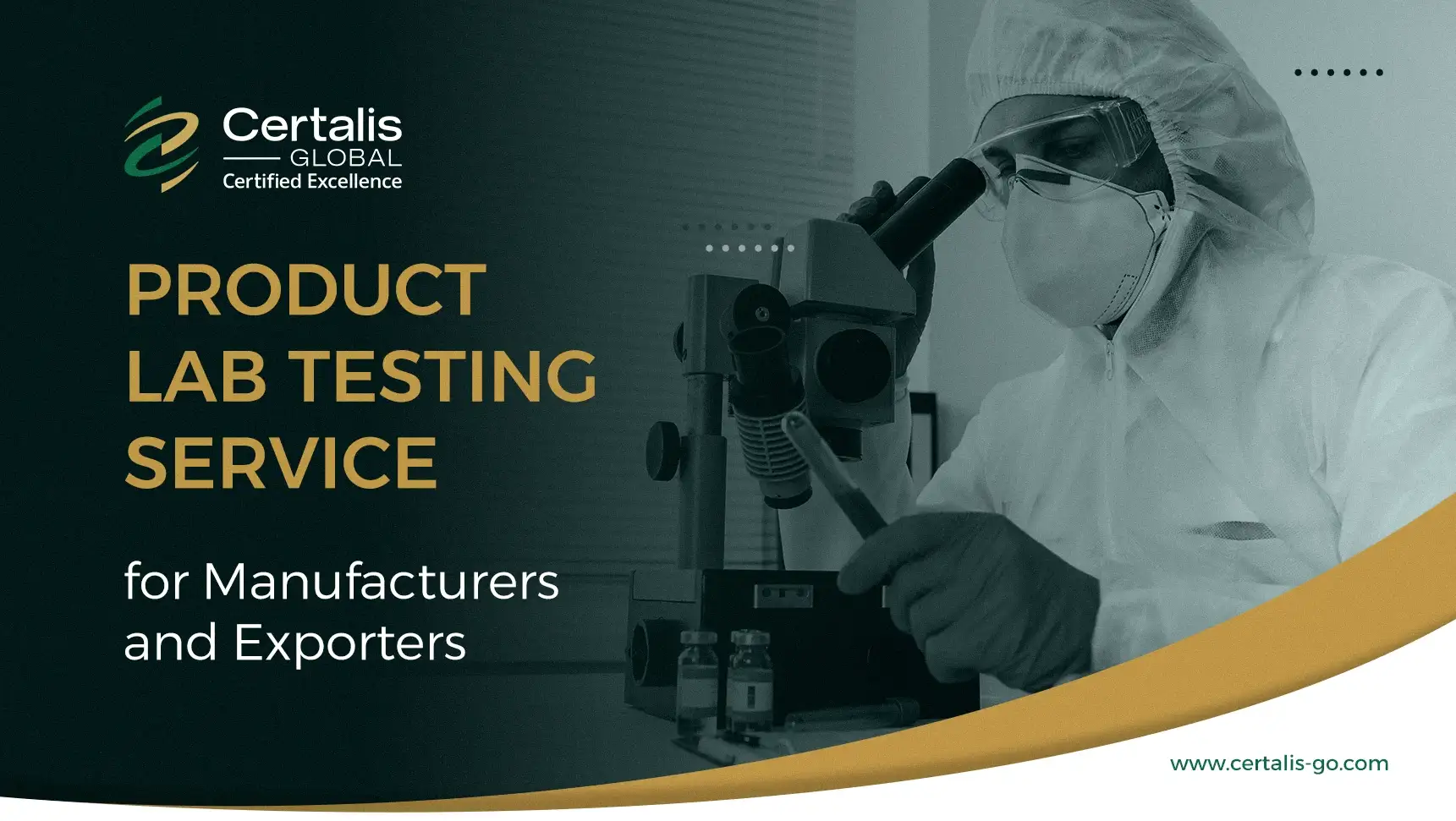
Every physical product that crosses a border eventually meets a customs officer, a retailer’s compliance team, or an angry customer holding a defective item, and a product lab testing service exists precisely to catch problems before any of those three moments happen, since independent labs measure a product against safety, performance, and material standards long before it reaches a shelf, so this guide breaks down what these services actually cover, which standards they check against, how the testing sequence unfolds, what drives the price up or down, and where Certalis Global fits into that timeline.
What Is a Product Lab Testing Service?
At its core, this is an independent evaluation where accredited technicians run a product through physical, chemical, or performance checks to confirm it behaves the way its specifications claim, and the resulting report becomes the paper trail that customs officials, retailers, and regulators ask for whenever a shipment’s safety comes into question.
- Independent verification carried out away from the manufacturer’s own quality team
- Physical, chemical, electrical, or mechanical evaluation depending on the product category
- A signed report referencing the exact standard the item was measured against
- Traceable results that regulators and buyers can request years after the shipment clears
- Coverage for raw materials, components, or finished goods before they leave the factory
Certalis Global can point you toward the right product lab testing service for your exact product category before a single sample ever leaves your facility.
Why Is Product Lab Testing Important for Exporters and Importers?
A shipment without proof of testing is a shipment a customs inspector can legally hold, and choosing a reliable product lab testing service upfront is what separates exporters who clear ports in days from those who wait weeks for a resolution, a gap that matters more each year as the global testing, inspection, and certification market climbs toward USD 417.8 billion in 2025.
- Manufacturer product testing catches design flaws before mass production multiplies the cost of a fix
- Import authorities in many countries block untested categories such as electronics, toys, and cosmetics outright
- Retailers and marketplaces increasingly refuse listings without a current test report on file
We match exporters with accredited labs suited to their product line so testing never becomes the bottleneck holding a shipment at the dock.
Read More : Saudi Arabia Import Document Requirements : A Complete Guide
What Types of Product Lab Testing Services Are Available?
Different categories call for entirely different product testing solutions, since a toy manufacturer worries about choking hazards and a food exporter worries about contamination, so labs typically split their offerings by discipline rather than by industry alone.
- Safety and mechanical testing for toys, electronics, furniture, and packaging
- Chemical and material composition testing for textiles, cosmetics, and plastics
- Performance and durability testing under simulated shipping or usage conditions
- Microbiological and contamination testing for food, beverage, and personal care items
Certalis Global routes each product to a lab that specializes in its category instead of forcing every item through a generic checklist.
What Standards Do Product Lab Testing Services Follow?
Consumer product testing services rarely invent their own benchmarks, since credible labs operate under the ISO/IEC 17025 competence standard and belong to accreditation networks such as ILAC’s mutual recognition arrangement, which lets a report issued in one country carry weight in another.
- ISO/IEC 17025 for the laboratory’s own competence and impartiality
- Product-specific standards such as ASTM, EN, or destination-country technical regulations
- GCC or Gulf standardization requirements for goods entering Saudi Arabia and neighboring markets
- Industry-specific frameworks covering electronics safety, flammability, or chemical restriction limits
- Buyer-imposed private standards that exceed the legal minimum in a given market
Our specialists confirm which standard actually applies to your destination market before testing begins, not after a report gets rejected.
Read More : What Does Certificate of Conformity Mean ?
How Does Product Lab Testing Work Step by Step?
Most product lab testing service engagements follow a similar arc regardless of the lab or the product, moving from sample collection through to a final signed report.
- Samples are drawn from production stock and sent to an accredited facility
- Technicians run the applicable tests and log every measurement against the standard
- A signed report is issued, listing pass or fail results for each parameter tested
Certalis Global coordinates sample pickup and scheduling with the product test lab so the sequence above runs without a communication gap.
What Factors Affect Lab Testing Costs and Timelines?
Pricing for a product lab testing service swings widely because complexity, not size, drives the bill, and a single component can cost less to test than a finished assembly with dozens of parts.
- Number of individual parameters or standards the product must be measured against
- Whether the lab needs to source special equipment for a niche test method
- Sample availability, since delayed samples push the entire schedule back proportionally
- Retesting fees if an initial batch fails and a corrected sample must be resubmitted
We negotiate lab turnaround times upfront so clients know their testing window before production even wraps.
Read More : SFDA Cosmetics Registration Guide 2026 | Certalis Global
How Can Certalis Global Simplify Your Lab Testing Process?
Coordinating a product lab testing service across multiple labs, countries, and standards is where most in-house teams lose time, and that coordination is exactly where Certalis Global steps in.
- Single point of contact across every lab, standard, and destination market involved
- Pre-screening of samples to catch obvious failures before formal testing fees apply
- Direct scheduling with accredited partner labs to compress waiting periods
- Plain-language interpretation of technical reports for non-specialist teams
- Ongoing tracking of standard updates that could affect a product’s compliance status
Talk to Certalis Global before your next production run and let us map out the testing plan alongside it.
FAQs
Is lab testing required for all exported products?
No, only categories covered by a destination country’s mandatory regulations require it, though many buyers request it voluntarily for quality assurance.
Do I need lab testing for every new product shipment?
Not always, since a valid existing report can sometimes cover repeat shipments of an unchanged product, depending on the destination market’s rules.
Can I use previous lab test reports for international customs clearance?
Sometimes, if the report is still valid and the accrediting body is recognized in the destination country, though many markets set expiry limits.
What happens if my product fails the lab test?
The lab documents which parameter failed, then the manufacturer can adjust the product or process and resubmit a corrected sample for retesting.